
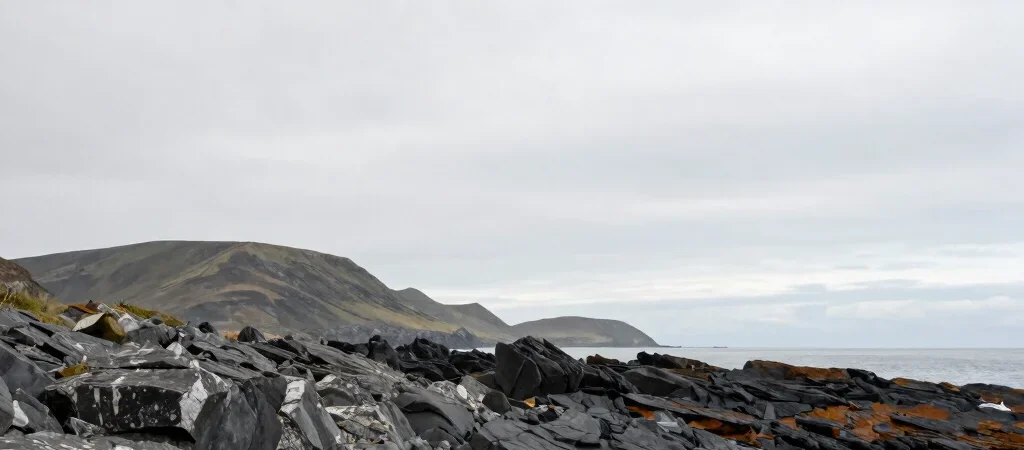
A landscape does not need a spectacular sky to hold attention. Often, what stays with me is a quieter arrangement: a dark ridge against open sky, a path through uneven ground, or light falling across one part of a scene. The photograph begins with noticing how those shapes relate.
Find the Scene’s Structure
Before deciding what belongs in the frame, I look for the main lines and areas of contrast. A shoreline, hillside, or stand of trees can guide the eye without needing a strong central subject. Simplifying the view helps the details that remain feel deliberate.
Wait for the Light to Settle
Light changes the character of familiar textures: rock can look soft in overcast conditions, while low sun can bring out the relief of a slope. I try not to treat dramatic light as the only useful light. A quieter moment can make the scene feel more open and considered.
Choose What to Leave Out
A small adjustment in viewpoint can remove a distracting edge or bring a foreground shape into conversation with the distance. That choice matters more than adding extra elements to make a frame feel busy. When a landscape photograph feels settled, it is often because the space in it has been given room to work.